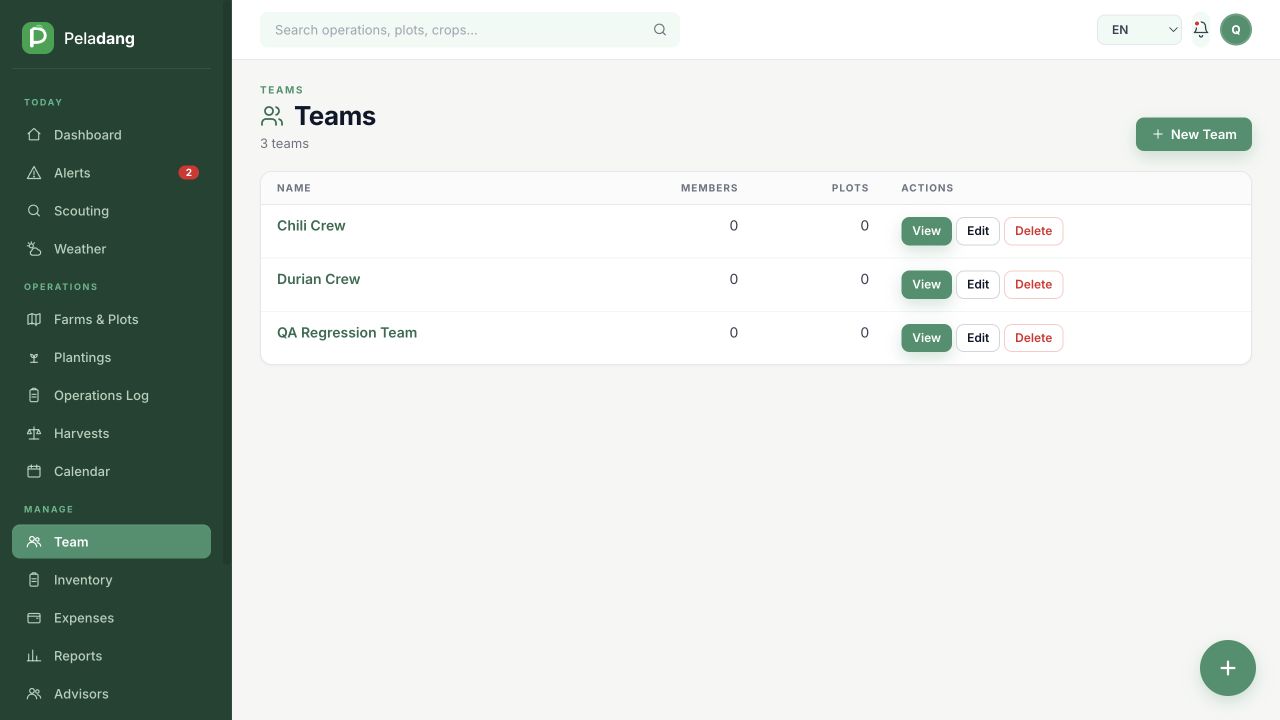
WhatsApp is useful for speed, but it is weak as an operating system for a farm. Messages get buried, voice notes are hard to search, task ownership becomes unclear, and by the end of the week nobody is fully certain which worker did what on which plot. On a one-person farm, that may be tolerable. On a farm with several plots, multiple workers, and occasional advisor support, it creates expensive confusion. A better workflow does not remove communication. It gives communication structure. Peladang replaces the “scroll and guess” problem with named teams, plot-based activity, daily logs, and a dashboard that lets owners see progress without chasing every worker for an update. The result is less duplicated work, fewer missed tasks, and clearer escalation when a disease issue or harvest deadline needs attention from both the field crew and an external advisor.
Why WhatsApp breaks down on real farms
The problem is not the app itself. The problem is that chat is organized around people, while farm work is organized around plots, crop stages, and deadlines. A worker may send a photo, but the owner still needs to remember which block it came from. A supervisor may type instructions in the morning, but by late afternoon the key message is already mixed with side conversations, family notes, and supplier replies. None of that creates a reliable operating record.
It also makes advisor support inefficient. When a farm asks for remote help, the owner usually forwards screenshots, paraphrases what a worker saw, and waits for a reply. That delays action and strips away context. A structured system is faster because the advisor can see the farm activity in the same place the owner sees it.
The operating model that works better
- Create named teams. A chili crew, durian crew, or nursery crew is easier to manage than one undifferentiated list of contacts.
- Assign work to plots, not only to people. The plot should be the anchor because that is where disease pressure, labour, and profitability are all measured.
- Log operations on the same day. Daily checks, issue reports, and completed field work should become part of the farm record immediately.
- Use one dashboard for follow-through. Owners should be able to open the app and see what is done, what is late, and where the next risk is building.
- Escalate to advisors through shared context. The best remote advice comes when the advisor can see activity history, not only a forwarded chat message.
What changes when teams use a structured workflow?
Instructions stop living in disappearing chat history. Work becomes attached to a place, a date, and a result. That makes it easier to coach workers, verify completion, and review why a block performed well or poorly after harvest.
The minimum routine owners should enforce
- Start the day with a plot-based task view, not a long message thread.
- Make workers log issues when they see them instead of reporting everything verbally at the end of the day.
- Use one team name per working unit so attendance and responsibility are obvious.
- Review late or incomplete work from the dashboard before planning tomorrow.
- When an issue needs outside advice, share it through the advisor workflow so the context stays attached to the farm record.
Where advisors fit into the picture
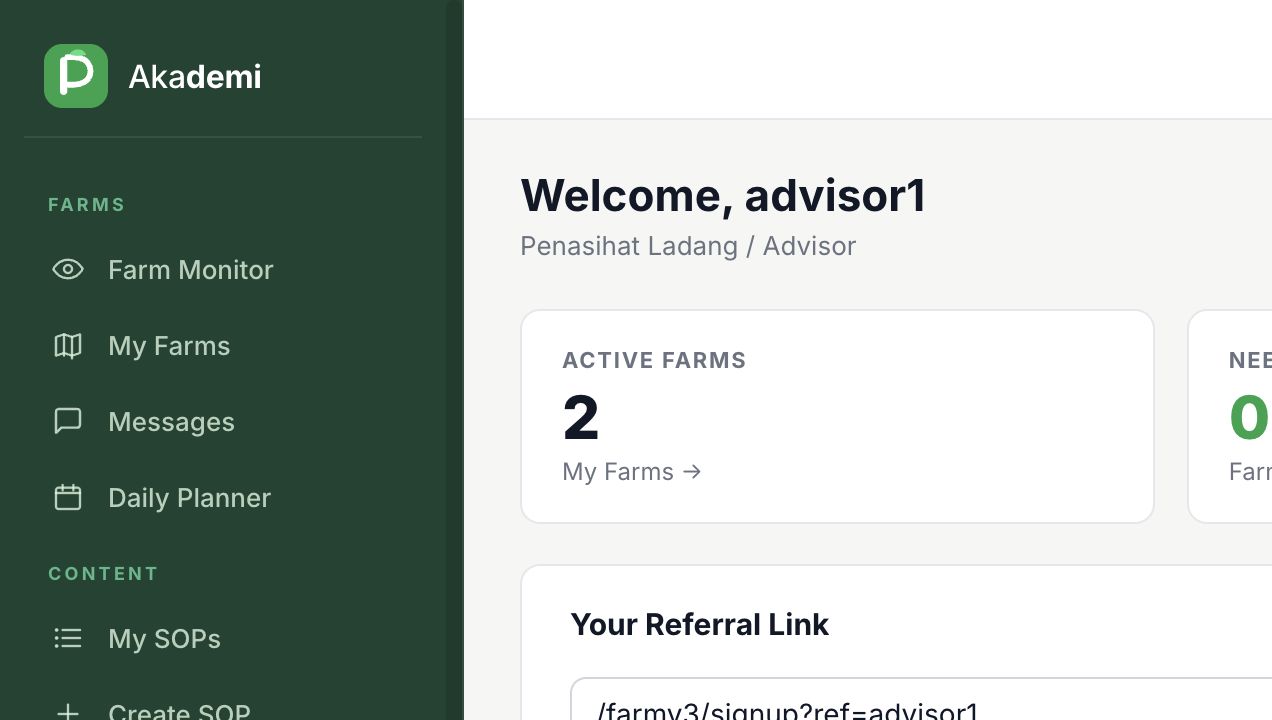
For many Malaysian farms, the next stage after team structure is advisor structure. A remote advisor is most valuable when they can see active farms, recent activity, and the issues that need attention without requiring the owner to manually retell everything. The Akademi dashboard shown above is useful because it surfaces exactly that context: current farms, recent field activity, and where intervention may be needed. It turns advisory work from reactive chat support into a more consistent operating layer.
If you want the broader feature view, see Peladang’s team management page. If you are comparing approaches before changing your workflow, read our farm app comparison page.
Related Resources
Move your crew out of message chaos
Build teams, connect work to real plots, and give owners and advisors one place to review what happened in the field.
Organize My Farm Team for Free